Anyone who has been able to experience the Amazon knows that the jungle is a web of life and a political territory where the people who live there have been containing the advance of the extractive frontier for centuries.
However, the current situation in the Amazon basin has crossed a critical line. We are no longer just talking about protecting a specific area of forest, but about preventing the systemic collapse of the entire biome in the region.
Between August 16 and 21, 2026, Ecuador will host the XII Pan-Amazon Social Forum (FOSPA), The FOSPA summit, an organizational gathering of the nine countries of the Amazon basin, will have its epicenter of political debate in the city of Puyo (Pastaza) from August 18 to 20. It seeks to move from denunciation to binding direct action.
These are the most impactful political and territorial factors that mark this important Pan-Amazonian meeting.
The "point of no return" is not a slogan, it is the current reality.
For decades, community warnings about river and soil degradation were dismissed by centralist governments. Today, formal science has reached the level of diagnosis that Indigenous peoples have been denouncing in assemblies.
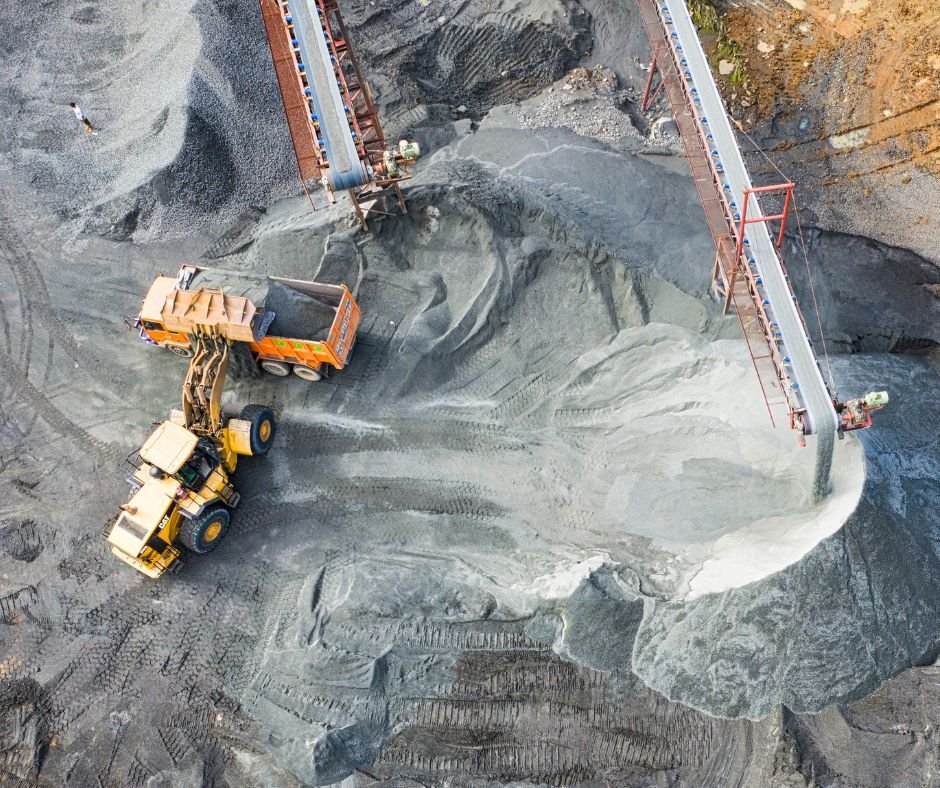
According to reports from Scientific Panel for the Amazon (SPA), The Amazon biome has already lost approximately 18% of its original forest cover, and a 38% additional is in a degraded state due to selective deforestation, fires and mining pressures.
When combined deforestation reaches between 20% and 25%, the ecosystem will lose its ability to recycle moisture, initiating an irreversible process of "savannization".
«"This dynamic is pushing the Amazon towards a critical point of no return… increasing the risk of an ecological, social, and climatic collapse with irreversible consequences on a regional and global scale." Scientific Panel for the Amazon (SPA)
This fact completely changes the balance of power: defending the Amazon is no longer a local environmental cause, but a measure of global climate survival.
The Yasuní precedent: Popular consultation as a governance tool
The XII FOSPA arrives in Ecuador with an unprecedented historical precedent in the Amazon basin: the triumph of the Yasuní Popular Consultation in August 2023, where the majority of the Ecuadorian population voted to keep the oil of Block 43-ITT underground.
This fact demonstrated two things in practice:
Democratic legitimacy: That citizens can stop established extractive projects through legal and constitutional voting.
Real co-governance: That the alliance between the community structure (such as CONFENIAE and CONAIE) and organized civil society has the capacity to influence the State's public policies.
FOSPA seeks to project this territorial decision-making model to the other eight Pan-Amazonian countries, arguing that the self-determination of peoples should prevail over state concessions.
From "environmental discourse" to real collapse: Lessons from the Bolivian model
One of the most critical points of analysis on FOSPA's agenda is the evaluation of governments that adopted pro-Mother Earth rhetoric but maintained extractive industries. The case of Bolivia has become a prime example of what must be avoided.
Despite having the Law of the Rights of Mother Earth (Law 071) and a plurinational constitutional framework, the country's state policies prioritized the expansion of the oil, gas, and lithium and gold mining frontiers. This led to historical conflicts such as the highway through the TIPNIS (Isiboro Sécure Indigenous Territory and National Park).
Currently, Bolivia has positioned itself as one of the world's leading importers of mercury, contaminating transboundary basins such as the Madre de Dios River and severely impacting the health of communities like the Ese Ejja and Tacana. The lesson for the XII FOSPA is clear: Written laws do not guarantee the protection of the territory if the economic model does not change.
An event organized in "Houses", which breaks the bureaucratic commissions
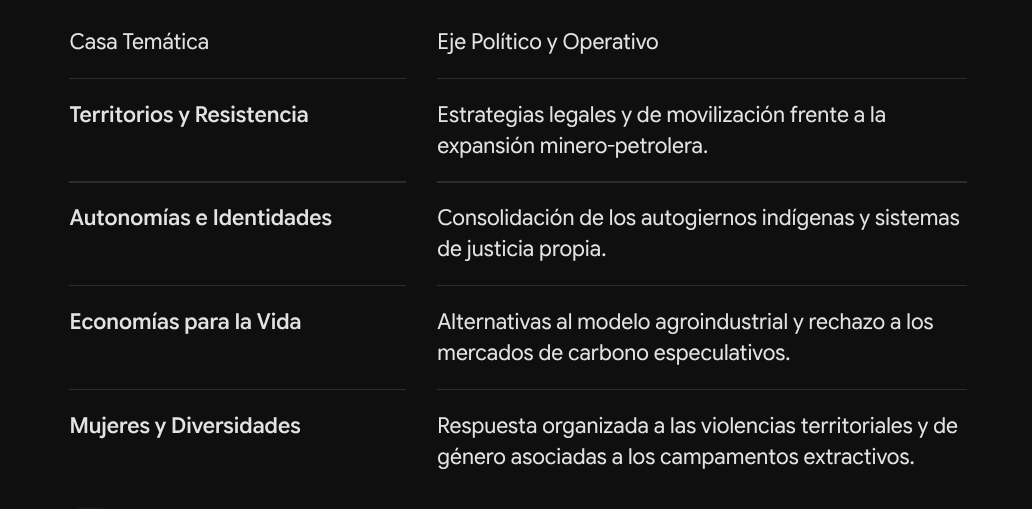
To prevent the meeting from ending in diplomatic declarations without applicability, the methodology of the XII FOSPA structures the debate through working spaces called Themed Houses, designed to generate operational political mandates
The ultimate goal of this structure is to produce a Pan-Amazonian Political Mandate and a Regional Action Plan with deadlines, international spokespeople and community monitoring mechanisms.
The generational change in community leadership
The defense of the Amazonian territory has changed in its technical forms without losing its organizational roots. Within the framework of FOSPA, the Permanent Youth Camp It gives visibility to a new generation of indigenous leaders and territorial defenders.
This youth combines traditional knowledge of community assemblies with the use of territorial monitoring technologies (drone mapping, GIS geographic information systems for reporting land invasions) and international strategic litigation. They do not act as a "support" sector, but as political actors with their own voice in decision-making.
The 12th FOSPA in Ecuador demonstrates that the Amazon has ceased to be a peripheral issue and has become the center of the region's geopolitical and socio-environmental disputes. The integration of the nine countries through their grassroots organizations seeks to establish a territorial buffer zone to prevent the biome from reaching its breaking point.
In response to the acceleration of mining, oil and forestry concessions throughout the basin: Do states and civil society have the political capacity to assume the territorial mandates of indigenous peoples before the degradation of the biome becomes irreversible?

 EN
EN