
XII FOSPA (Panamazonian Social Forum).
From social gathering to operational urgency
Between August 16 and 21, 2026, the city of Puyo (Puyuk), capital of the Pastaza province in Ecuador, became the political epicenter of the Amazon basin by hosting the XII Pan-Amazon Social Forum (FOSPA). Territorial delegations from nine countries participated in this event: Ecuador, Colombia, Peru, Brazil, Bolivia, Venezuela, Guyana, Suriname, and French Guiana.. The essence of the meeting was that of a grassroots assembly driven by indigenous peoples, Afro-descendant communities, peasant organizations, urban collectives, and socio-environmental movements..
The context in which the event was held XII FOSPA is critical. The Amazon is approaching what scientists call the "point of no return," a threshold of deforestation and degradation beyond which the ecosystem will lose its capacity for self-regulation, progressively transforming into a dry savanna. This reality motivated the Puyuk gathering to go beyond simply denouncing the expansion of extractive frontiers; it demanded the effective implementation of accumulated popular mandates, prioritizing the historic landmark of Yasuní in Ecuador..
Thus, on August 20, 2026, the people of Puyuk gathered in the streets to denounce a betrayal by the State. That very day marked exactly three years since the Ecuadorian people, in an unprecedented exercise of democratic sovereignty, mandated at the ballot box that the Yasuní oil reserves remain underground.
What we are witnessing today is a snapshot of a state operating illegally, ignoring the popular mandate to kneel before extractive capital. This 12th FOSPA is a direct challenge to the mixed-race civil society of the cities: their indifference is not neutrality; it is the lubricant that allows the machinery of dispossession to continue crushing life. The defense of the Amazon has ceased to be an «indigenous cause» and has become the last bastion of regional survival in the face of a climate collapse that knows no urban boundaries.
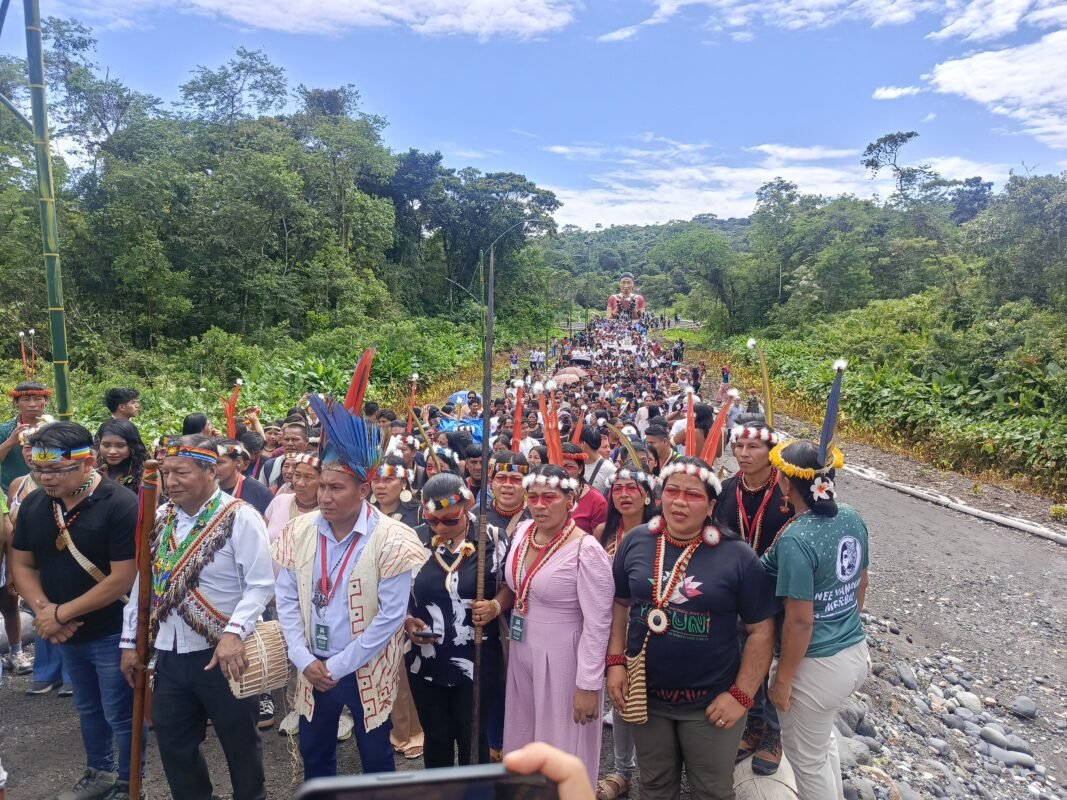
The Great Amazonian March, within the framework of the FOSPA Pan-Amazonian Social Forum, brought together thousands of people, who departed from one of the points near the Puyo River.
One of their stops was the Pastaza Governor's Office; the governor was not there.
The geopolitics of dispossession and the new Operation Condor
The crisis in the Pan-Amazon region is not, and should not be understood as, an isolated border dispute or a mere problem of local environmental management. It is a symptom of the outdated system of unbridled global capitalism and a competitive multipolarity where US imperialism and the Global North cling to their unipolar power through force. We are witnessing a re-edition of Operation Condor, this time executed through an authoritarian military and political force advancing across Latin America.
The current geopolitical scenario is defined by three fundamental axes:
Imperialism and Hegemonic Dispute
A war between powers for the replacement of planetary control, using the Amazon as a storehouse of strategic resources (fresh water, rare minerals and biodiversity).
War against the Peoples
The imposition of "internal wars" in countries like Ecuador, Colombia, and Peru, where anyone who resists territorial dispossession is labeled as an "internal enemy.".
Transnational Solidarity
The Amazonian struggle is directly related to the resistance of French Guiana against colonial domination and to the denunciation of the genocide of the Palestinian people, identifying how the structures of military control and transnational expansionism permeate the region.
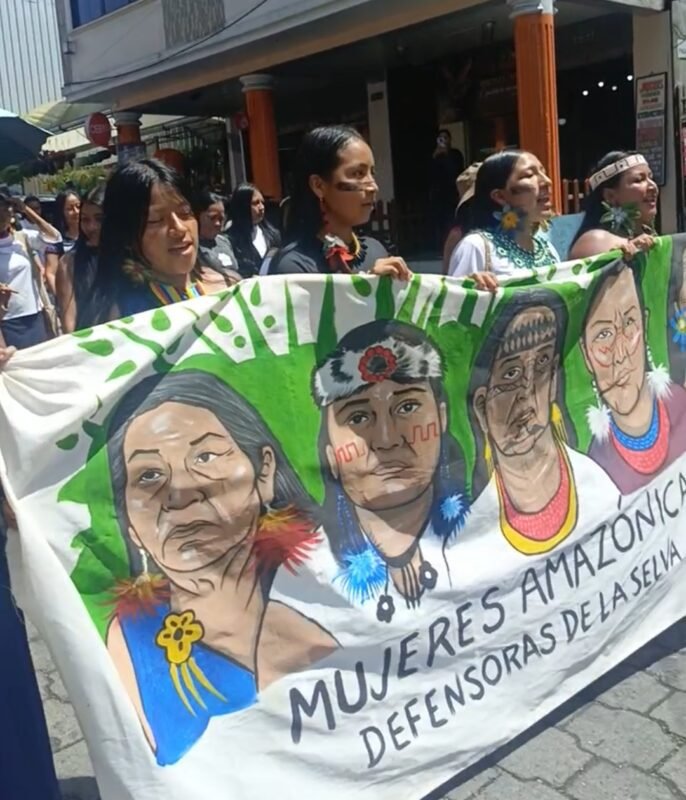
Women from different peoples and nationalities made a strong presence at FOSPA
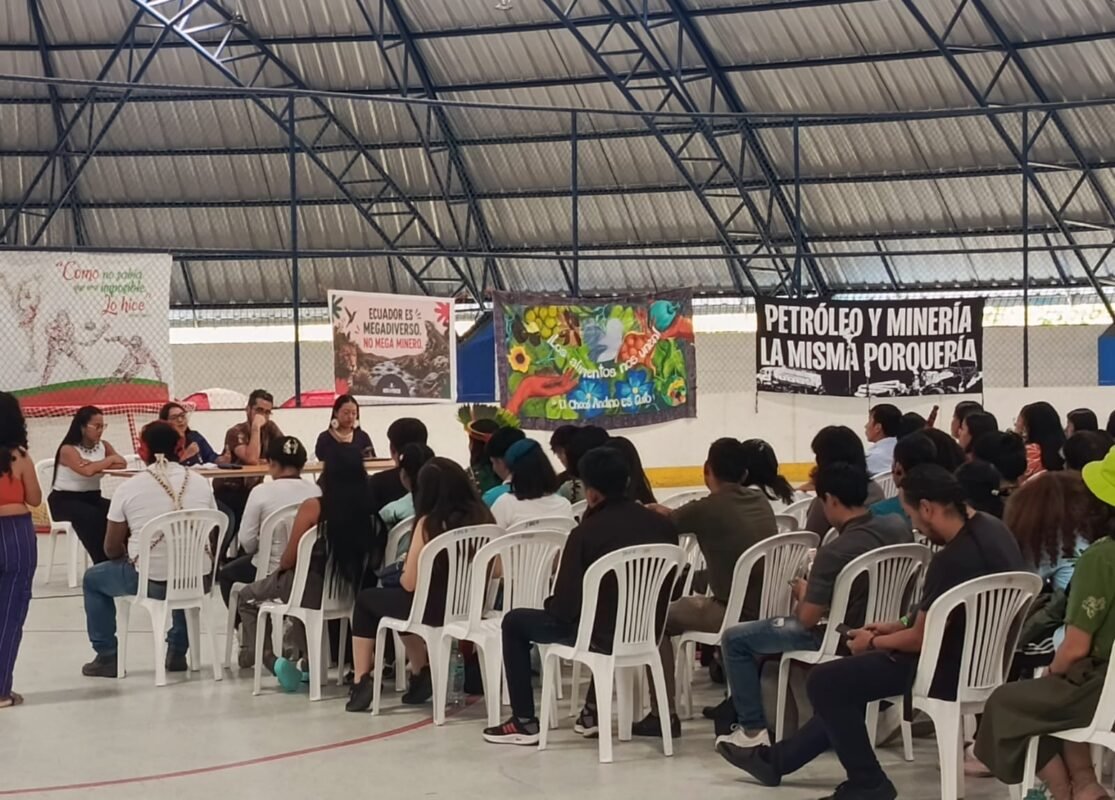
The Pan-Amazonian Social Forum Youth Camp proved to be the necessary generational shift for the defense of the peoples and the territory.
The trap of false solutions and financial colonialism
Rigorous research compels us to dismantle the narrative of "green finance." Industrialized countries, primarily responsible for the ecological collapse, seek to settle their historical debt through mechanisms that are nothing more than new forms of usury and financial colonialism. During FOSPA PUYO 2026, instruments such as "jaguar bonds" and international arbitration were denounced as tools to shield corporate impunity and undermine the judicial sovereignty of peoples.
Carbon markets and debt swaps
Commodification of the biosphere and systematic violation of prior, free and informed consent through abusive contracts.
Case (Colombia – Carbon Piracy): In the Colombian Amazon, indigenous communities in Vaupés and Guainía have been victims of "carbon piracy" by private companies (project developersAbusive contracts were signed in foreign languages or without translators, ceding rights over their territories for up to 100 years in exchange for minimal payments.
Impact: It fractures the social cohesion of communities, breaks territorial governance and violates the right to Prior, Free and Informed Consultation (PHIC).
Themed Bonds and "Jaguar Bonds"«
Increase in illegitimate external debt; conditional loans that stifle local economies and privatize common goods.
Case (Ecuador – Debt-for-Nature Swap): In 2023, Ecuador completed the largest debt-for-conservation swap to protect the Galápagos Islands. Although it reduced its sovereign debt, it financed the buyback through private bank debt (Credit Suisse) under foreign laws.
Impact: It financializes nature and conditions local public policies to goals imposed by private bondholders and multilateral banks, deepening financial dependence.
Repayable climate finance
Transfer of resources that prioritizes international financial bureaucracy and the war industry over community life.
Case (Brazil and the Amazon basin): Much of the funding from multilateral banks (such as the IDB or World Bank) intended for "climate adaptation" comes in the form of interest-bearing loans, not as donations for historical reparations.
Impact: Biodiverse countries end up going into debt to repair environmental disasters historically caused by industrialized nations. These funds end up paying international consultants and financial intermediaries instead of reaching the grassroots level.
Technocratic mitigation mechanisms
Massive territorial dispossession and dismantling of the sovereignty of peoples over their water sources and ecosystems.
Case (Bolivia – The Lithium Triangle): Megamining of lithium and critical minerals (cobalt, copper) to manufacture electric car batteries in the Global North.
Impact: In the Salar de Uyuni (Bolivia), intensive extraction devours millions of liters of water in hyper-arid areas, drying up ancestral springs, displacing indigenous communities and destroying ecosystems under the pretext of "saving the planet".

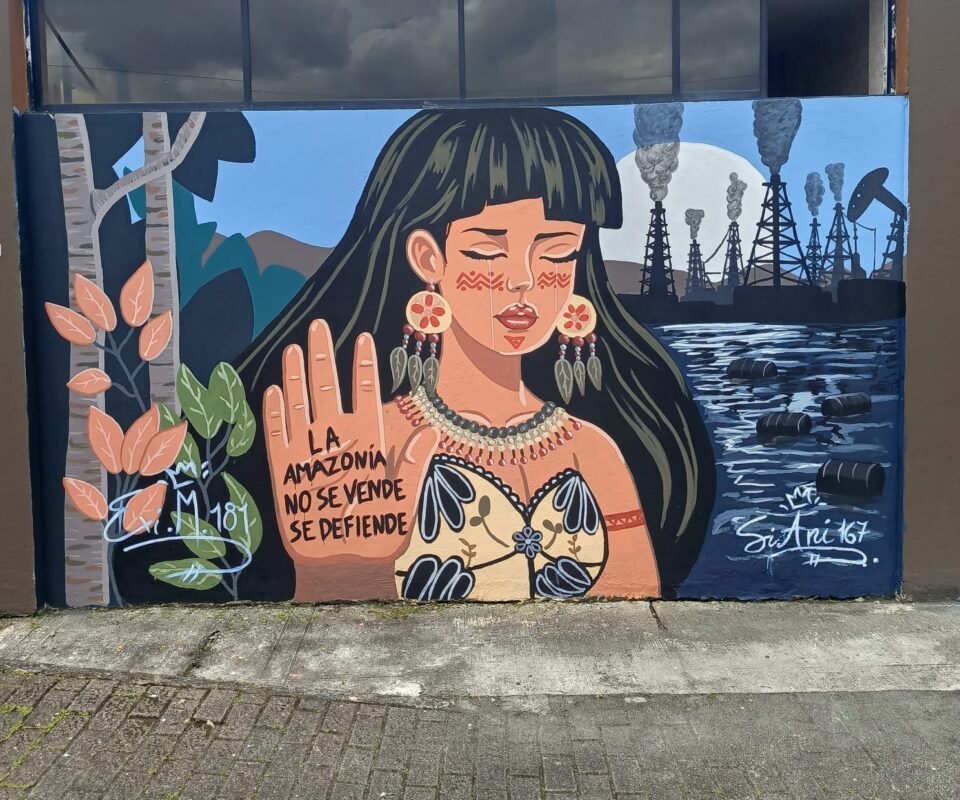
Different forms of artistic and cultural expression highlighted the importance of sustaining the lives of the peoples in the Amazon basin.
The Amazon in a State of Emergency: the point of no return and organized crime.
From Puyuk, FOSPA declares the Amazon in a State of Emergency; and this is not an exaggeration, it is the necessary response to the imminent collapse of the biosphere. Legal extractivism is not the only aggressor; today we face a lethal symbiosis between state structures and transnational organized crime. The militarization promoted by governments has deliberately failed: far from dismantling criminal groups, it is used to intimidate and criminalize the guardians of the territory.
The immediate threats that destroy the Kawsak Sacha (Living Jungle) are:
Transnational Illegal Economies
Drug trafficking, alluvial mining with mercury, illegal logging and human trafficking exert a parallel armed territorial control.
State extractivism
The relentless expansion of the oil, mining, and hydroelectric frontier fragments vital biological corridors.
Breakdown of the Social Fabric
Corporate strategies designed to co-opt leadership, divide community assemblies, and destroy the organic organization of peoples.
Financial Impunity
Banking entities and international markets that launder assets derived from Amazonian destruction while concealing their true beneficiaries.
Country-by-country analysis. Legal and bureaucratic obstacles and actions to overcome them
To make the demands of FOSPA viable and ensure that international declarations translate into real governance, it is essential to diagnose and resolve the institutional bottlenecks, regulatory obstacles, and organic conflicts of each Amazonian nation.
ECUADOR
Operational Diagnosis:
Legal and Institutional Obstacle: Following the Yasuní referendum (Block 43-ITT), the Executive branch and Petroecuador have delayed the dismantling plan, citing a "fiscal security impact" and a lack of liquidity. The Organic Law for the Comprehensive Planning of the Special Amazonian Territorial Constituency (CTEA) channels funds through the Amazon Fund, but its budget is bogged down in the bureaucracy of the provincial and municipal Decentralized Autonomous Governments (GADs), postponing direct investment in community-based development plans.
Internal Obstacle: Co-optation and leadership fractures within the indigenous movement (CONAIE/CONFENIAE) driven by local partisan agendas, which reduces the unity of territorial demands.
Overcoming Strategy:
Legal and Constitutional Route: Filing of a Non-Compliance Lawsuit before the Constitutional Court of Ecuador against the Ministry of Energy and Petroecuador to demand a binding schedule for the removal of infrastructure in the ITT, supported by a request for precautionary measures before the Inter-American Commission on Human Rights (IACHR) for the strict protection of the peoples in voluntary isolation (Tagaeri and Taromenane).
Regulatory and Institutional Route: Promote a reform to the CTEA Law Regulations that automates direct budget transfers to the execution of Life Plans and Indigenous Autonomies without discretionary intermediation by mayors and prefects.
Organic Route: Establish internal regulations for representation that require mandatory rotation and accountability in grassroots community assemblies to safeguard the spokesperson role of CONFENIAE.
COLOMBIA
Operational Diagnosis:
Legal and Institutional Obstacle: The excessive slowness of the regulatory process in implementing the "Total Peace" policy and Law 2272 hinders the full and institutional recognition of Indigenous and Maroon Guards as legitimate self-protection authorities. Additionally, an unresolved regulatory conflict persists between the National Natural Parks System (PNN) and Indigenous Reserves or Afro-descendant Community Councils regarding land control and use, a situation exploited by organized crime groups and armed dissidents.
Internal Obstacle: Extreme vulnerability of traditional authorities to the forced recruitment of community youth and the systematic assassination of leaders.
Overcoming Strategy:
Legal and Constitutional Route: Declaration and formalization of "Humanitarian Safeguard Zones" through self-protection decrees issued by the authorities of the Special Indigenous Jurisdiction (JEI) and the Black Communities (Law 70), requiring mere validation ex post (and not prior approval) by the Ministry of the Interior.
Regulatory and Institutional Route: Creation of a binding co-management protocol between PNN and ethnic authorities that guarantees territorial administration in community hands.
Organic Route: Deployment of community-based early warning and social intelligence systems, along with intergenerational food sovereignty and territorial custody programs to curb the co-optation of youth by armed actors.
PERU
Operational Diagnosis:
Legal and Institutional Obstacle: The Congress of the Republic maintains a legislative blockade that progressively weakens environmental oversight (with setbacks to the Forestry Law) and incentivizes illegal mining and logging. Agencies such as the Environmental Assessment and Enforcement Agency (OEFA) and OSINFOR lack budget allocations and police support to intervene in critical areas contaminated by mercury and oil.
Internal Obstacle: Asymmetry and technical gap in Amazonian federations (such as AIDESEP or ORPIO) to face complex litigation and formulate scientific expert reports that support environmental claims.
Overcoming Strategy:
Legal and Constitutional Route: Promote a coordinated regional strategy of constitutional litigation for the ratification and expansion of judicial rulings that recognize the great Amazonian rivers (such as the Marañón and Nanay rivers) as subjects of rights endowed with legal and inalienable personality.
Regulatory and Institutional Route: Institutionalize through regional ordinances the evidentiary validity of the reports issued by Community Environmental Monitors, allowing their heavy metal analyses to be admitted directly as criminal procedural evidence by the Specialized Environmental Prosecutor's Office (FEMA).
Organic Route: Creation of a "Traveling School of Strategic Litigation and Community Expertise" that continuously trains the local technical teams of the federations.
BRAZIL
Operational Diagnosis:
Legal and Institutional Obstacle: The unregulated proliferation of the private carbon market (Corporate REDD+This generates accelerated "carbon piracy" that dispossesses Indigenous and Quilombola communities through exploitative, long-term contracts. Simultaneously, the technical paralysis within FUNAI and INCRA perpetuates a historical backlog in the demarcation of Indigenous Lands and the titling of Quilombola Territories.
Internal Obstacle: Pressures and intense internal division campaigns orchestrated by project development companies (project developers) about the local chiefs and leaders.
Overcoming Strategy:
Legal and Constitutional Route: Implement, publish and register before a public notary and the Federal Public Ministry (MPF) the Autonomous Protocols of Prior, Free and Informed Consultation prepared by the APIB bases and the Quilombola networks.
Regulatory and Institutional Route: Establish by binding resolution the absolute nullity by operation of law (nullity by right) of any private contract on environmental services or carbon credits that has not been expressly endorsed by the sovereign General Assembly of the community and ratified by the MPF.
Organic Route: Unify a contract monitoring platform under the direct governance of indigenous councils to audit and expel speculative companies from the territories.
BOLIVIA
Operational Diagnosis:
Legal and Institutional Obstacle: There is a regulatory framework that favors gold mining cooperatives, which enjoy excessive tax exemptions and environmental permissiveness to devastate the northern Amazon (Beni, Madre de Dios, and Kaka rivers). At the administrative level, the Vice Ministry of Autonomies systematically stalls the process of converting municipalities into Indigenous Peasant Autonomies (AIOC).
Internal Obstacle: Partisan co-optation of traditional parent organizations (such as CIDOB and CONAMAQ), which hinders social mobilization against gold mining.
Overcoming Strategy:
Legal and Constitutional Route: Direct and effective exercise of the Indigenous Native Peasant Jurisdiction (JIOC) in the Indigenous Native Peasant Territories (TIOC), issuing normative mandates for the confiscation, expulsion and immobilization of dredges and heavy machinery, protected by the Rights of Mother Earth supported by the Constitution.
Regulatory and Institutional Route: Demand through social control the immediate simplification of bureaucratic requirements for the consolidation of AIOCs, eliminating the repetitive referendum for statutory approval.
Organic Route: To establish autonomous grassroots territorial defense committees, independent of the electoral cycle and disconnected from the partisan leadership of the official structures.
Venezuela, Guyana, French Guiana, Suriname and Guyana
Operational Diagnosis:
Legal and Institutional Obstacle:
Venezuela: The validity of the Orinoco Mining Arc decree and the presence of military commanders in extraction networks nullify any possibility of litigation or environmental oversight within the internal judicial system.
French Guiana: The constitutional framework of the French State does not recognize the collective rights of indigenous peoples or their original ownership of their lands, considering them "private property of the State".
Suriname and Guyana: The complete lack of a framework legislation for the titling of community lands classifies the jungle as public land, leaving it unprotected against transnational mining and oil concessions.
Internal Obstacle: In Venezuela, the direct risk to life forces defenders into silence or exile; in the Guianas and Suriname, extreme linguistic and institutional fragmentation hinders regional articulation.
Overcoming Strategy:
Legal and International Route:
For Venezuela: Deploy anonymous satellite monitoring mechanisms and covert social mapping to channel evidentiary files directly to the IACHR, the UN Human Rights Commissioner and the International Criminal Court (ICC) through FOSPA's cross-border networks.
For Suriname and Guyana: To legally demand the mandatory execution of the landmark rulings of the Inter-American Court of Human Rights (such as the case Saramaka vs. Suriname) to freeze the granting of new extractive concessions.
For French Guiana: Submit formal petitions to the UN Special Committee on Decolonization for the recognition of the territorial rights of the Kali'na, Lokono, Wayana, Wayãpi, Teko and Palikur peoples.
Organic Route: Establish a trinational network for protection and secure communication in the Guiana Shield subregion to unify demands for land titling and resistance against extractivism.
The Mandate for Action: Non-Waiverable Requirements
The Puyuk Declaration translates into a mandate for action with five key areas that States and international organizations can no longer ignore:
Audit and Cancellation of Illegitimate Debt
Cessation of payments on external debts that finance the plundering and dismantling of international arbitration that favors corporations.
Reform to the Amazon Law
Comprehensive review of the Law of the Special Amazonian Territorial Constituency in Ecuador to guarantee real inclusion and direct budget allocation to Afro-descendant, indigenous and peasant communities.
Effective protection for defenders
Implementation of a Pan-Amazonian mechanism for monitoring, early warning and cross-border protection to stop the murder and persecution of nature guardians.
Exclusion Zones and Legal Recognition
Legal protection of Amazonian territories as areas free of mining, oil and mercury, with the immediate reversal of current concessions.
Non-Reimbursable Climate Finance
Funds for restoration should go directly to community self-governments, rejecting any scheme linked to carbon markets.
To download the PUYUK 2026 Political Declaration, within the framework of the Pan-Amazonian Social Forum, Follow this link.

 EN
EN