

We traveled through time and space to the Ecuadorian coast, covering the ninety kilometers that separate the city of Guayaquil from General Villamil (Playas), to take the turnoff to the rural parish of El Morro. There, surrounded by the rugged tropical dry forest ecosystem characteristic of this area, we looked up at a unique rock formation. Ancient navigators, upon sighting it from the open sea, christened it Cerro del Muerto (Hill of the Dead), as its profile traces with astonishing precision the silhouette of a man lying beneath the celestial vault.
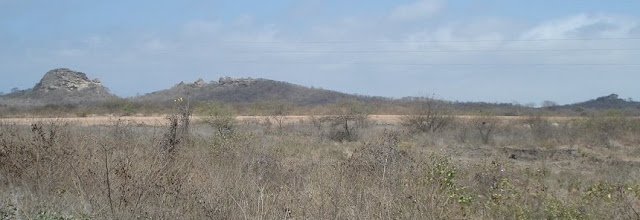
After walking along some gravel paths, leaving behind the sanctuary of the Virgin of the Rock that now guards the entrance, we immersed ourselves in the memories of a land that is still imbued with mysticism.
The stories of some of the elders still recall that the nights on this hill hold enchanting tales. They say that at midnight, the breezes carry the strains of an invisible band. Those who have dared to venture to the source of this spectral music recount a profound surprise, an echo of times when the boundary between the earthly and the magical was imperceptible.
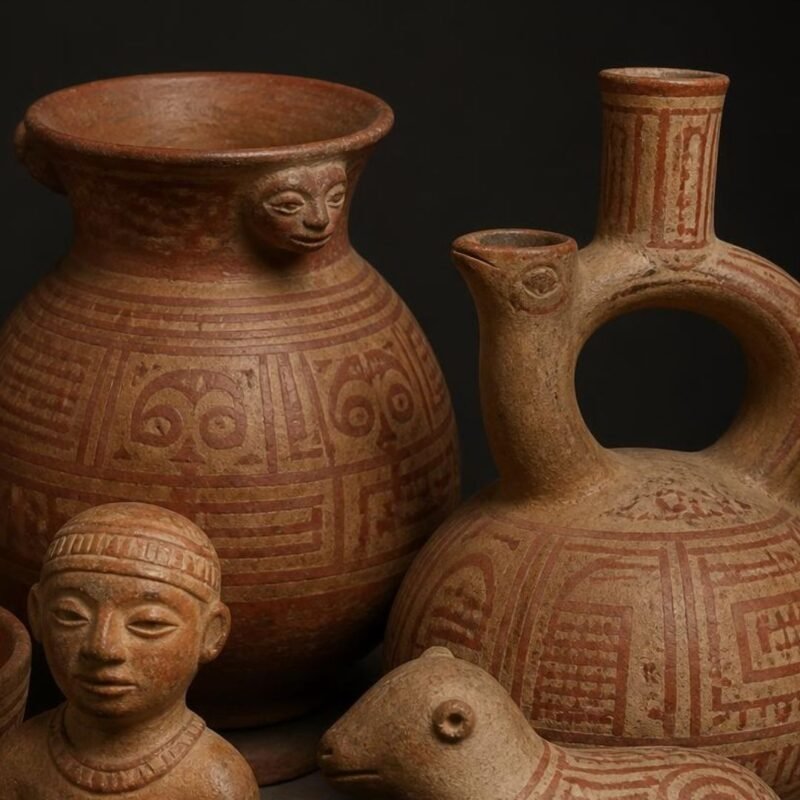
Within the exploration of these stories, we find archaeological truths intertwined with myth. In these coastal lands, the pre-Columbian cultures, specifically the society Manteño-Huancavilca The people who inhabited the region between 600 and 1532 AD practiced complex funerary rites. They placed their deceased, along with all their belongings and offerings, inside large clay vessels, scientifically known as funerary urns. This proven ancestral practice gave rise to legends of treasures and spirits that guard eternal rest within the rocky peak.
When we imagine life in bygone days around the extinct freshwater springs that once bubbled up in these arid lands, where the twilight harbored luminous and magical phenomena, we recall the young people who walked the paths and encountered a persistent flash of lightning, a wandering light that followed them closely. Upon witnessing it, their skin prickled and their heads seemed to expand; an event reminiscent of the combustion of natural gases or will-o'-the-wisps, but which, in oral tradition, manifested as pure magic.
The locals remember that this land wasn't always arid, for in the heavy winters of the past, it is said that a majestic donkey with gleaming eyes would emerge from the night mist. Anyone who tried to ride it would get lost in the labyrinthine paths of the hill, prompting the residents to seek refuge early in the warmth of their homes. Right at dawn, a collective murmur could be heard. An invisible procession of souls marched toward the church to pray before returning to the mud and stone cemetery; crowds could be heard, but when people looked out, they found only the stillness of the night.
References and details for this story:
Location and distance: The El Morro parish is located in the province of Guayas, 90 kilometers from Guayaquil, accessible by the road to the Coast and General Villamil (Playas).
Archaeological context: The burials in clay pots correspond to the funerary practices in urns of the Manteño-Huancavilca culture (600 – 1532 AD), extensively documented on the Ecuadorian coast.
EcosystemThe natural environment of Cerro del Muerto belongs to the tropical dry forest biome, endemic to the coastal region of Ecuador.
Sanctuary: The Virgin of the Rock is a real and current site of devotion, erected on the slopes of the rock formation, which serves as a tourist and religious landmark.
TO LOVE IS TO SHARE


Posorja, the seer
The legend of Posorja and his powers of vision.

Mochica Sumpa 3: THE LOVERS OF SUMPA (Narrative)
12,000 YEARS OF ROMANTIC HISTORY.- Thousands of years ago, a people arrived to these lands [...]

 EN
EN